
AllOnGeorgia reached out to Chattooga County Schools Superintendent Dr. Michelle Helie following confusion in the community over a roughly $200 million increase in the county’s property tax digest and what that increase actually means for local taxpayers and the school system’s budget. Here is what she had to say.
According to Dr. Helie, the approximately $200 million figure refers to growth in the net taxable value of property in the county, not additional money being collected or received by the Chattooga County School System. The net tax digest increased from $727,879,414 in 2025 to $928,495,267 in 2026, an increase of about $200.6 million in taxable property value. For comparison, the school system’s entire FY27 budgeted revenue across all funds is approximately $47.64 million.

As the digest grew, the Board of Education actually reduced its net maintenance and operations (M&O) millage rate, from 10.049 mills in 2025 to 8.518 mills in 2026, a decrease of about 15.2%. “M&O” refers to Maintenance and Operations, the portion of the school system’s budget that funds day-to-day costs like teacher and staff salaries, utilities, building upkeep, instructional materials, and transportation. This is separate from funding categories like Capital Projects and Debt Service, which cover construction and major facility upgrades rather than everyday operating expenses.
Despite the lower M&O millage rate, the total school M&O property tax levy still increased from $7,314,460 in 2025 to $7,908,923 in 2026, an increase of $594,462, or 8.13%.
“The approximately $200 million increase in the tax digest should not be interpreted as a $200 million increase in school system revenue or taxes collected,” Dr. Helie said.
She also noted that the $7,908,923 levy figure was calculated using the tax digest available at the time the millage rate was set, and that number has already started to decrease as property tax appeals are processed, and may continue to shift as more appeals are resolved.
Adding further context, Dr. Helie said approximately $1,131,465 of the 2026 school tax levy will be covered through the state’s Homeowner Tax Relief Grant (HTRG) rather than paid by local property owners. After accounting for that state funding, approximately $6.78 million of the levy remains to be funded locally, comparable to the total school M&O tax levy in 2023, which was approximately $6.83 million.
FY27 Budget Breakdown
Looking at the district’s FY27 budget as a whole, Chattooga County Schools begins the fiscal year with an estimated $18.3 million in fund balance across all funds, and anticipates approximately $47.64 million in current-year revenue. After budgeted expenditures, the district projects an ending fund balance of approximately $17.26 million across all funds.
Within the General Fund, which supports day-to-day district operations, the school system begins FY27 with an estimated $11 million fund balance and anticipates approximately $37 million in revenue. After expenditures, the General Fund is projected to end the year with roughly $11.04 million in fund balance, slightly higher than where it started. According to Dr. Helie, this means the district’s primary operating fund is balanced without relying on reserves to cover recurring expenses.
Dr. Helie pointed specifically to where General Fund revenue growth is coming from: state QBE funding increased from approximately $22.68 million in FY26 to $24.96 million in FY27, an increase of about $2.28 million. Budgeted local revenue increased from approximately $8.54 million to $9.16 million, an increase of about $621,000.
“This provides additional context for the overall General Fund increase and demonstrates why growth in the property tax digest should not be equated with growth in school-system revenue,” Dr. Helie said.
Why the District Maintains a Fund Balance
Dr. Helie said maintaining a healthy fund balance is an important part of the district’s financial stability, with the district’s financial professionals recommending a reserve equal to roughly three months of the operating budget. Those reserves, she said, allow the district to manage cash flow, respond to unexpected expenses or revenue changes, and maintain operations when revenue arrives at different points throughout the fiscal year.
She also emphasized that the district works to maximize funding from sources beyond local property taxes, including state QBE funding, federal and state grants, and other competitive funding sources, pointing to the FY27 increase in QBE funding as an example of why the district’s full revenue picture matters more than any single figure, like digest growth, taken on its own.
“Our goal is to be responsible stewards of all available resources while limiting the local tax burden to the extent possible and continuing to provide the services our students and schools need,” Dr. Helie said.
By the Numbers: Five-Year Digest and Levy History
According to the Current Property Tax Digest and Five-Year History of Levy released by the Board of Education, the county’s net digest value has grown steadily over the past five years:
- 2021: $394,165,973
- 2022: $472,518,452
- 2023: $626,400,402
- 2024: $657,261,617
- 2025: $727,879,414
- 2026: $928,495,267
Over that same period, the net M&O millage rate has consistently declined:
- 2021: 12.4040
- 2022: 12.0000
- 2023: 10.8980
- 2024: 10.5970
- 2025: 10.0490
- 2026: 8.5180
Despite the declining millage rate, total M&O taxes levied have risen every year as the digest has grown.
- 2021: $4,889,235
- 2022: $5,670,221
- 2023: $6,826,512
- 2024: $6,965,001
- 2025: $7,314,460
- 2026: $7,908,923
Dr. Helie provided AllOnGeorgia with the district’s FY26 and FY27 approved budget documents, along with the Current Property Tax Digest and Five-Year History of Levy, for publication alongside this report.
Last reported Chattooga County Schools audit information via: School System Dashboard – DOAA
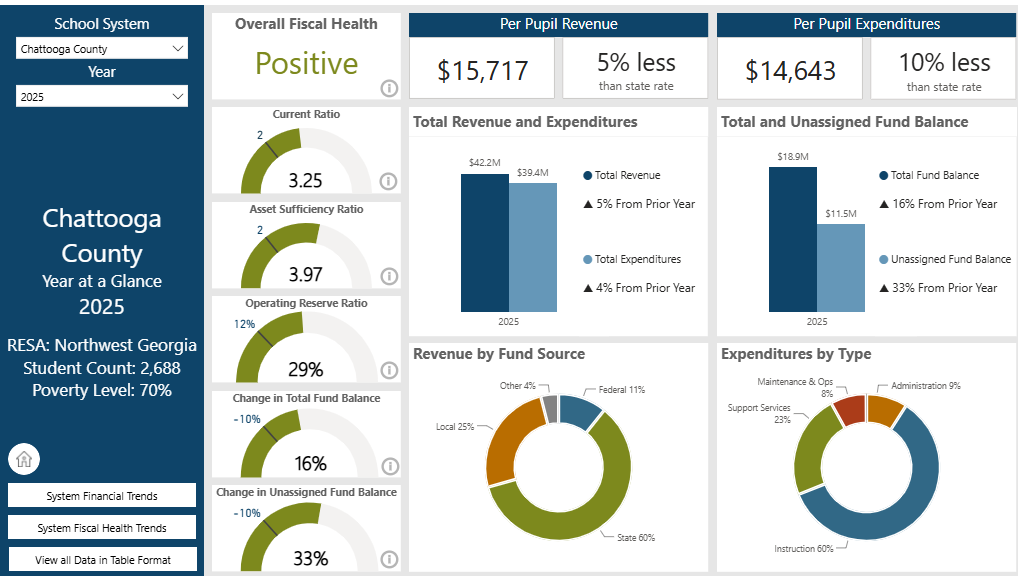
Read Dr. Helie’s entire response below:
Thank you for reaching out and giving us an opportunity to clarify the information. I believe there may be some confusion between the growth in the property tax digest and an increase in the school system’s budget or revenue.
The approximately $200 million figure refers to the increase in the net taxable value of property in the county, not additional money being collected or received by the Chattooga County School System. The net tax digest increased from $727,879,414 in 2025 to $928,495,267 in 2026, an increase of approximately $200.6 million in taxable property value. For perspective, the school system’s entire FY27 budgeted revenue across all funds is approximately $47.64 million.
As the digest increased, the Board of Education reduced its net maintenance and operations millage rate from 10.049 mills in 2025 to 8.518 mills in 2026, a reduction of approximately 15.2%.
The total school M&O property tax levy increased from $7,314,460 in 2025 to $7,908,923 in 2026, an increase of $594,462, or 8.13%. Therefore, the approximately $200 million increase in the tax digest should not be interpreted as a $200 million increase in school system revenue or taxes collected.
It is also important to note that the $7,908,923 levy was calculated using the tax digest available when the millage rate was established. That amount has already begun to decrease as property tax appeals are processed and may continue to change as additional appeals are resolved.
In addition, approximately $1,131,465 of the 2026 school tax levy will be funded through the state’s Homeowner Tax Relief Grant (HTRG) rather than by local property owners. After accounting for that anticipated state funding, approximately $6.78 million of the levy remains to be funded locally. For comparison, the total school M&O tax levy in 2023 was approximately $6.83 million.
Regarding the school system’s FY27 budget, the district begins the fiscal year with an estimated $18.3 million in fund balance across all funds and anticipates approximately $47.64 million in current-year revenue. After budgeted expenditures, the district projects an ending fund balance of approximately $17.26 million across all funds.
Looking specifically at the General Fund, which supports the district’s primary day-to-day operations, the district begins FY27 with an estimated $11 million fund balance and anticipates approximately $37 million in revenue. After budgeted expenditures, the General Fund is projected to end the fiscal year with approximately $11.04 million in fund balance—slightly higher than where it began the year. This means the district’s primary operating fund is balanced without relying on reserves to support recurring expenditures.
It is also helpful to look at where the General Fund revenue growth is coming from. State QBE funding increased from approximately $22.68 million in FY26 to $24.96 million in FY27—an increase of approximately $2.28 million. Budgeted local revenue increased from approximately $8.54 million to $9.16 million, an increase of approximately $621,000. This provides additional context for the overall General Fund increase and demonstrates why growth in the property tax digest should not be equated with growth in school-system revenue.
Maintaining a healthy fund balance is an important component of the district’s financial stability. Our financial professionals recommend maintaining a reserve of approximately 3 months of the operating budget. These reserves allow the district to manage cash flow, respond to unexpected expenditures or changes in revenue, and maintain operations when revenues are received at different points throughout the fiscal year.
We also recognize the financial pressures facing families and property owners in our community. As a school system, we work to maximize funding available from sources beyond local property taxes, including state QBE funding, federal and state grants, competitive grants and other eligible funding sources. The increase in QBE funding reflected in the FY27 budget is one example of why it is important to look at the district’s complete revenue picture rather than assuming that budget growth is being funded through increased local property taxes. Our goal is to be responsible stewards of all available resources while limiting the local tax burden to the extent possible and continuing to provide the services our students and schools need.
I am providing the FY26 and FY27 budget documents and the Current Property Tax Digest and Five-Year History of Levy for publication. These documents provide the supporting information for the figures above.
I hope this information helps distinguish between the growth in the value of taxable property, the amount of property taxes levied, and the school system’s annual budget. They are three separate figures. The approximately $200 million increase relates to the value of property on the tax digest—not an increase in the school system’s budget, revenue, or tax collections.




Chattooga Local Government
Chattooga Schools Superintendent Clarifies Confusion Over Property Tax Digest Increase

Chattooga Local Government
New Warnock Report Finds SAVE Act Imposes Poll Tax on Millions of Married American Women


Chattooga Schools
GNTC Foundation awards fall 2026 scholarships

Chattooga Schools
U.S. News Ranks Berry No. 1 for Best Value in the South

Bulloch Public Safety
08/31/2026 Booking Report for Bulloch County
Bulloch Public Safety
09/08/2026 Booking Report for Bulloch County
Bulloch Public Safety
09/21/2026 Booking Report for Bulloch County
Bulloch Public Safety
09/25/2026 Booking Report for Bulloch County
Bulloch Public Safety
09/14/2026 Booking Report for Bulloch County