The views expressed in this article and the information shared are those of the author.
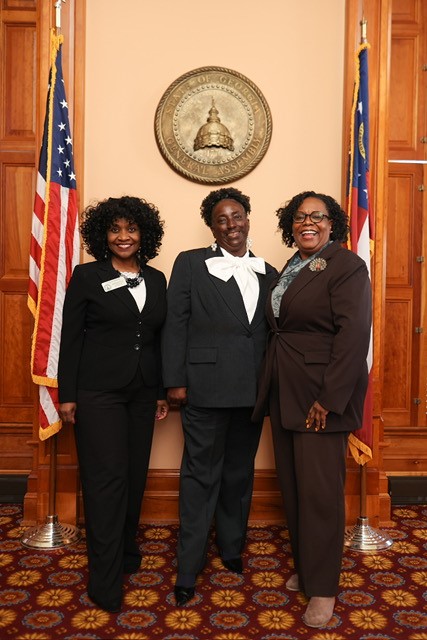
By State Representatives Viola Davis (D-Stone Mountain), Kim Schofield (D-Atlanta) and Sandra G. Scott (D-Rex)
As Georgia endures another record-breaking summer of scorching heat, the brutal truth can no longer be ignored: heat is not just uncomfortable, it’s deadly. Yet, too many workers across our state continue to labor in dangerous conditions without basic protections from extreme heat. If Georgia continues to do nothing, the price will be paid in lives lost, hospital beds filled and billions drained from our state economy.
That’s why we introduced House Resolution 393, which calls for the urgent creation of heat safety standards to protect Georgia’s workforce, especially those working outdoors or in unregulated indoor heat environments like warehouses, factories and kitchens.
We’re not talking about abstract risks. We’re talking about all sanitation crews, farmworkers, warehouse staff, landscapers, delivery drivers and construction workers, many of whom are Black, Brown, immigrant and low-wage, who are collapsing on the job, suffering from heatstroke or dying simply for showing up to work.
We are literally watching our people work themselves to death in Georgia’s heat. This is not a matter of comfort, it’s a matter of survival. No one should die because they’re doing their job.
Recent weeks have seen Georgia’s heat index soar above 110°F. Climate projections suggest the number of days with dangerously high temperatures will more than double in the next 20 years. The stakes are not just rising, they are accelerating.
The economic cost of inaction is staggering.
A 2023 Union of Concerned Scientists study projected that extreme heat would cost the U.S. economy over $100 billion annually by 2030, primarily from reduced labor productivity, missed workdays and heat-related medical emergencies. In Georgia alone, lost productivity and health care costs could exceed $10 billion over the next decade if we fail to act.
Every time a worker collapses from heat illness, it’s not just a medical emergency, it’s a financial one. The CDC estimates each severe heat illness costs $55,000 in direct and indirect expenses. These costs fall on hospitals, families, small businesses and taxpayers. And that doesn’t account for rising insurance premiums, lost workdays or legal liabilities for employers who fail to protect their workforce.
Georgia’s heat is unforgiving, and so is our failure to act. Our workers are the backbone of this state’s economy. If we won’t protect them, then we’re failing everyone.
HR 393 urges the state to adopt common sense standards, such as:
• Guaranteed access to clean drinking water
• Rest breaks in shaded or cooled areas
• Training on recognizing heat stress and emergency protocols
• Whistleblower protections for workers who speak up
• State agency review and enforcement mechanisms
These policies are not burdensome, they are lifesaving. And they’re good for business: healthier workers mean higher morale, fewer sick days and greater productivity. Other states, like Oregon and Washington, have already implemented heat safety standards and seen their industries adapt successfully. Georgia cannot afford to lag behind while its workforce suffers.
If we can legislate for corporations, we can legislate for the human beings powering those corporations. We cannot claim to value life, liberty and labor while ignoring the very conditions that strip workers of all three.
Despite its urgency, HR 393 was not given a hearing, nor was it considered or brought to a vote during the 2025 legislative session. This failure to act puts thousands of Georgia workers at continued risk. However, we remain undeterred. We are committed to ensuring that this resolution receives the attention, debate and passage it rightfully deserves in the 2026 legislative session.
The heat is on—literally and legislatively. Georgia must meet this moment with faithful service to those who build our economy.
Let’s pass HR 393. Protecting workers should never be optional.
*Editor’s note: a photo is included.
Representative Viola Davis represents the citizens of District 87, which includes a portion of DeKalb County. She was first elected to the House of Representatives in 2018 and currently serves on the Defense & Veterans Affairs, Health, Insurance, Natural Resources & Environment and Urban Affairs committees.
Representative Kim Schofield represents the citizens of District 63, which includes a portion of Fulton County. She was first elected to the House of Representatives in 2017 and currently serves as Secretary of the Urban Affairs Committee. She also serves on the Creative Arts & Entertainment, Health, Industry and Labor and Small Business Development committees.
Representative Sandra Scott represents the citizens of District 76, which includes a portion of Clayton County. She was first elected to the House of Representatives in 2010 and currently serves on the Banks & Banking, Defense & Veterans Affairs, Human Relations & Aging, Insurance and Reapportionment and Redistricting committees.
###






Chattooga Local News
GBI Arrests Former Teacher in Murray County

Bulloch Public Safety
04/01/2026 Booking Report for Bulloch County

Chattooga Local News
Oak Hill and The Martha Berry Museum’s Next Family Morning to Occur on April 8

Chattooga Schools
2027 Georgia Teacher of the Year finalists announced
Bulloch Public Safety
03/31/2026 Booking Report for Bulloch County
Bulloch Public Safety
03/09/2026 Booking Report for Bulloch County
Bulloch Public Safety
03/30/2026 Booking Report for Bulloch County
Bulloch Public Safety
03/16/2026 Booking Report for Bulloch County
Bulloch Public Safety
03/10/2026 Booking Report for Bulloch County
Bulloch Public Safety
03/20/2026 Booking Report for Bulloch County