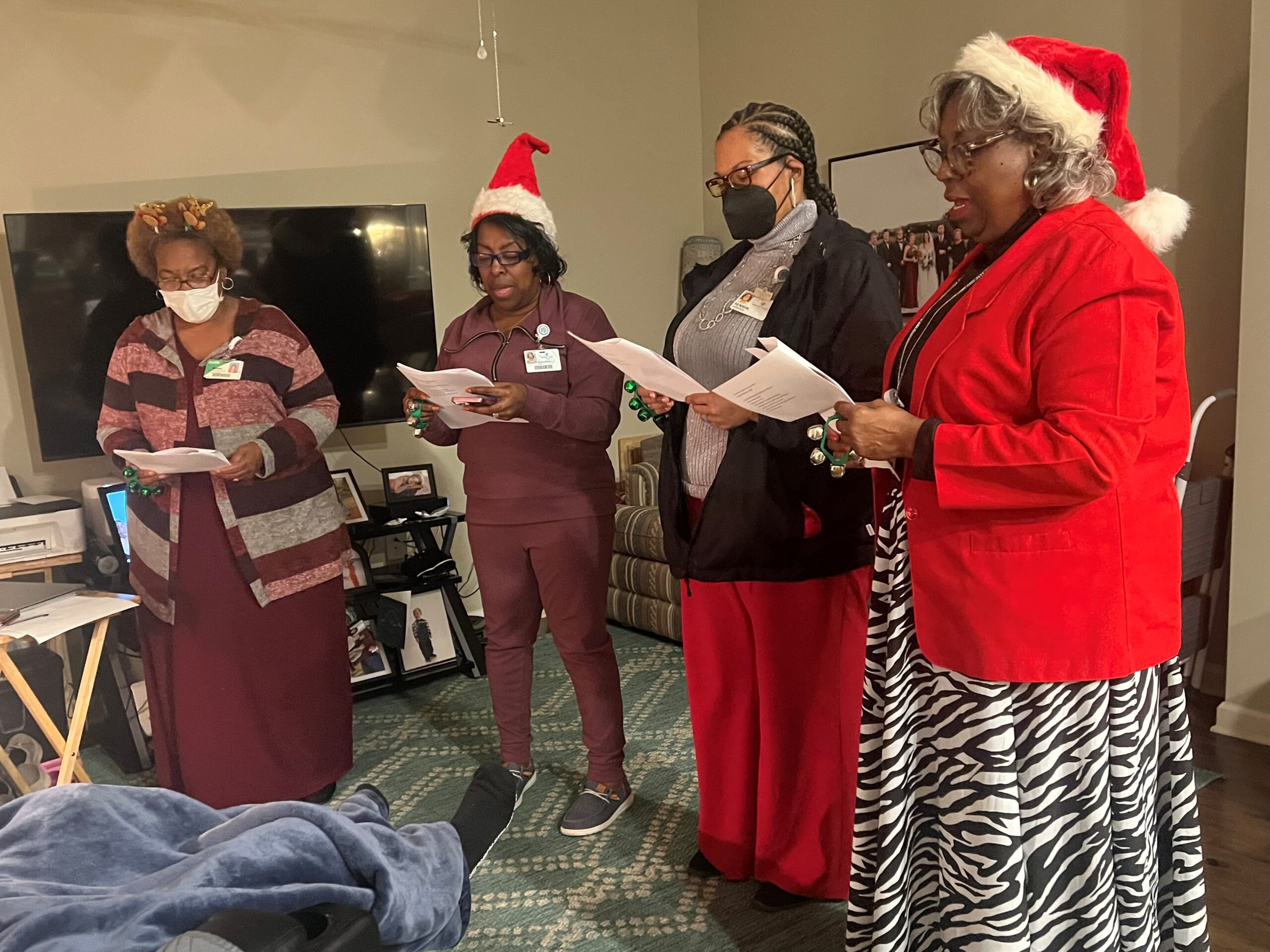
They weren’t dressed in Victorian garb or standing in the snow. There was no one-horse open sleigh, and they didn’t travel door-to-door.
This mixture of social, clerical and other hospice workers already had worked a full day before heading out to sing. They traveled in a teal and white van driven by community engagement leader Will Byington, stopping at the homes of patients and their families.
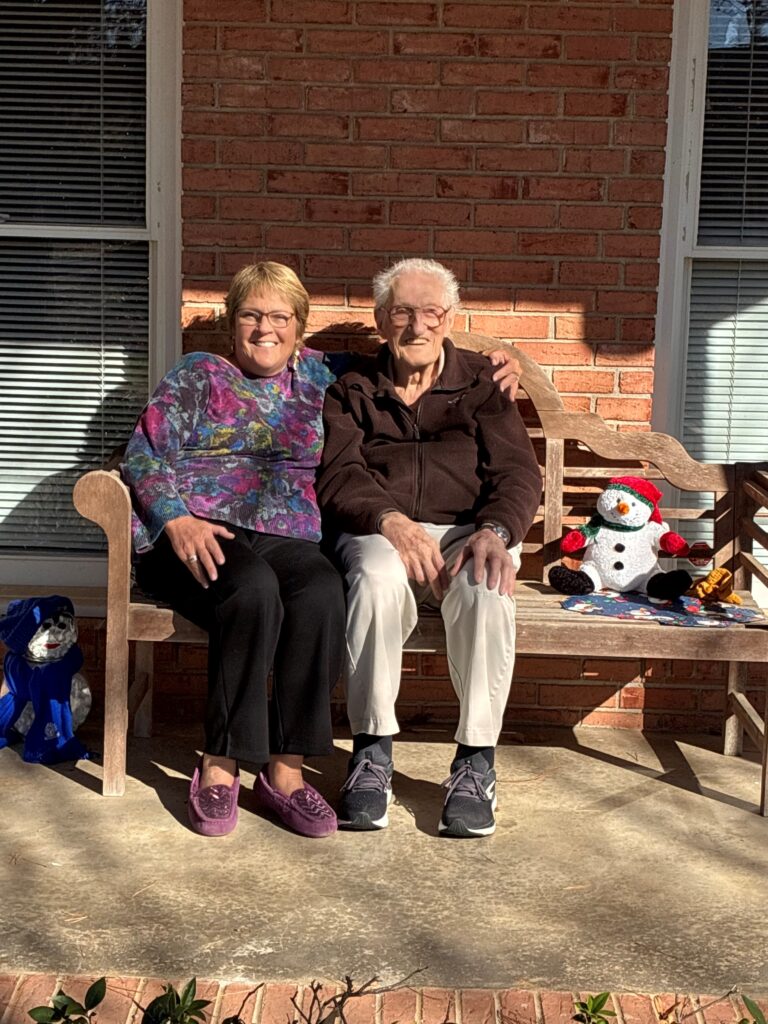
One of those stops was at the DeLano home. Bill DeLano was 95. Until October 2025, he had been able to walk half a mile a day, but a respiratory virus attacked his already compromised lungs. He told his family he wanted to move to hospice care. Daughter Elaine Turner never doubted the decision. The DeLano family, long-time patrons of Harbin Clinic and Atrium Health Floyd, had experienced hospice before with DeLano’s wife.
Hospice intake Coordinator Amy Burgess walked Turner through the process, a kindness she had not anticipated.
“My parents were best friends with her parents,” Turner said. “My parents have known Amy since the day she was born. There is comfort in the relationships that you build. And my dad’s nurse was a friend, not just a nurse.”
The carolers, she said, were an unexpected bonus — the perfect Christmas present at a difficult time.
When “Silent Night” began, DeLano’s eyes flooded with tears as he sang along. It had been his wife’s favorite carol.
“I’m sitting there with tears rolling down my face,” Turner said. “This is my sweet daddy, and they took the time to come. We didn’t have Christmas this year because he was too sick. That was our Christmas. It was wonderful. It was one of the biggest kindnesses we received.”
Caroling for patients is not new for hospice teammates. The tradition started in 1990, the year the hospice program was founded. The practice paused during the COVID-19 pandemic.
Social worker Kim Higgins remembers past years when teammates wore silly hats, carried jingle bells and brought along their children to sing. She and Bereavement Coordinator Patsy Wade decided 2025, the 35th anniversary of hospice, was the year to bring back the beloved custom.
Byington said the experience proved fulfilling.
“Watching the joy and excitement of our hospice patients who were in their beds at their homes with family made my heart full of joy,” he said.
DeLano passed away New Year’s Eve.
But, hospice is not about the passing, Turner said.
“A lot of people think hospice is about dying,” Turner said. “It’s not. It’s about living the way you want to and passing with dignity. I can’t sing their praises enough.”








Bulloch Public Safety
04/02/2026 Booking Report for Bulloch County

Chattooga Local News
GBI Arrests Former Teacher in Murray County
Bulloch Public Safety
04/01/2026 Booking Report for Bulloch County

Chattooga Local News
Oak Hill and The Martha Berry Museum’s Next Family Morning to Occur on April 8

Chattooga Schools
2027 Georgia Teacher of the Year finalists announced
Bulloch Public Safety
03/09/2026 Booking Report for Bulloch County
Bulloch Public Safety
03/30/2026 Booking Report for Bulloch County
Bulloch Public Safety
03/16/2026 Booking Report for Bulloch County
Bulloch Public Safety
03/10/2026 Booking Report for Bulloch County
Bulloch Public Safety
03/20/2026 Booking Report for Bulloch County